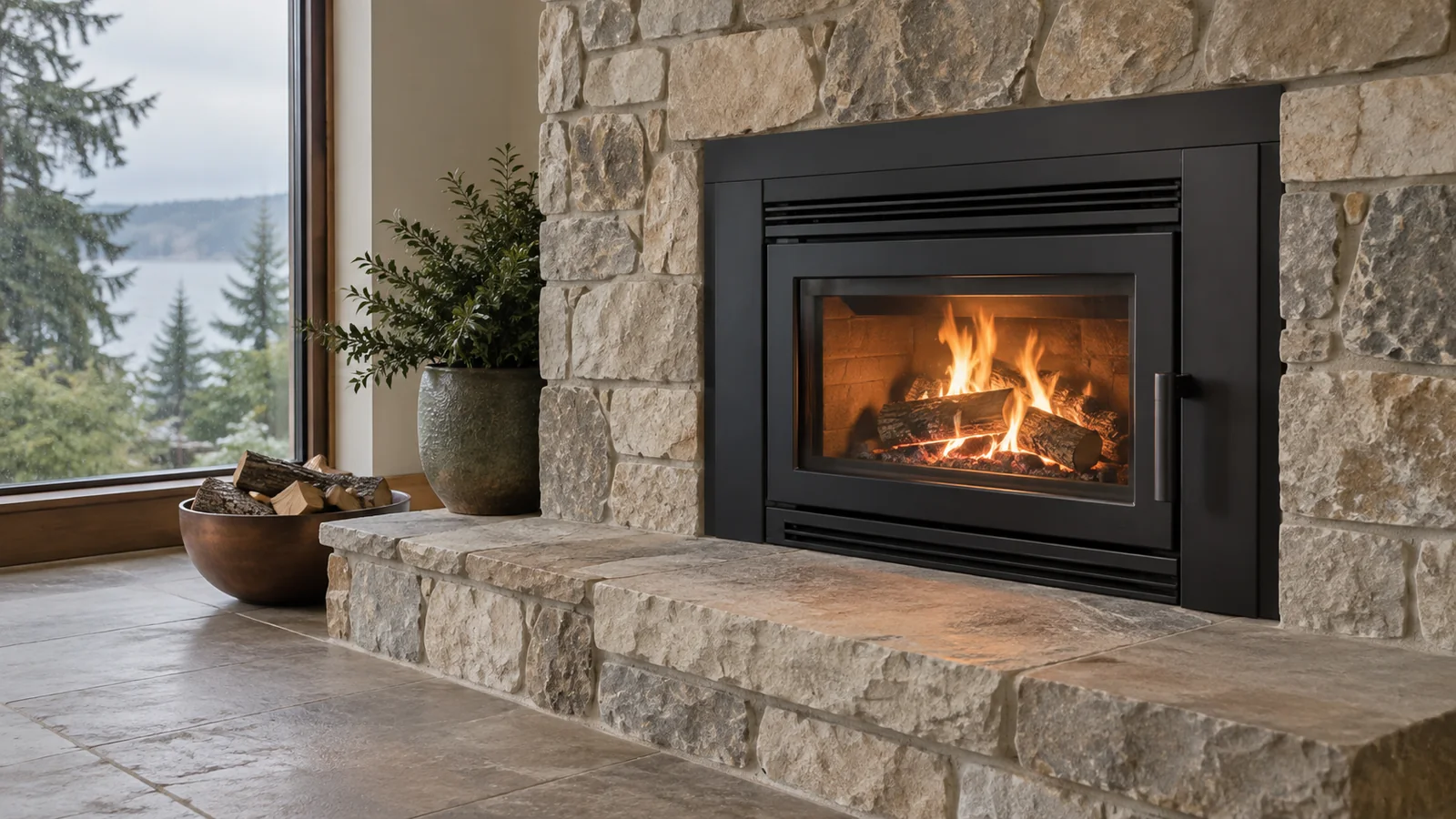
A wood fireplace insert can turn an existing fireplace into a more useful source of warmth while keeping the appeal of a real wood fire. For Kitsap homeowners who enjoy burning wood, the main advantages are better heat delivery, more efficient fuel use, and a comfortable gathering space built around the hearth.
The best results come from matching an EPA-certified insert to the fireplace, chimney, and area you want to heat. Here is what an insert changes, where the benefits come from, and what to check before buying.
What is a wood fireplace insert?
Often called a wood-burning insert or wood fire insert, it is an enclosed wood heater designed to fit inside a compatible existing fireplace. It has its own firebox and door and connects to an approved venting system. It is a complete heating appliance, not simply a set of glass doors added to an open fireplace.
The EPA’s wood-burning appliance guide explains that a wood insert functions like a wood stove fitted into a fireplace. A freestanding stove sits outside the fireplace opening; an insert uses that opening as its home.
Six advantages of a wood-burning insert
1. More useful heat from your fireplace
An open hearth is appealing to watch, but it is an inefficient way to heat a home. A modern insert combines an enclosed firebox with a design intended to transfer more of the fire’s energy into the living space. The practical benefit is a fireplace that can contribute meaningful warmth instead of serving mainly as a visual feature.
Compare the efficiency and heat-output information for the exact models on your shortlist. There is no single efficiency figure that applies to every wood insert.
2. Better use of your firewood
A certified insert can provide useful heat with less wood than an older uncertified appliance. Improved combustion makes better use of the fuel, which can mean fewer logs to purchase, stack, and carry for a comparable amount of heat. Puget Sound Clean Air Agency describes this benefit in its cleaner-burning guidance.
Actual savings depend on the appliance being replaced, firewood cost, burning habits, and installation. Budget for the complete project and ongoing maintenance before assuming an insert will lower your total heating costs.
3. Comfortable heat where you spend time
An insert can add supplemental warmth to a frequently used living room or adjoining open area. This approach, often called zone heating, can make sense when the goal is to keep a particular part of the home comfortable.
Room layout matters. Heat does not move equally well through closed doors, separate floors, or long hallways. The EPA’s appliance-sizing guidance recommends matching the heater to the space and bringing a floor plan to a knowledgeable retailer. Ask about realistic coverage in your home rather than choosing solely by the largest advertised square-foot rating.
4. A refreshed hearth with a real flame view
An insert gives the fireplace a new visual centerpiece. Depending on the model, a broad glass door, simple black surround, or more traditional detailing can suit the room while preserving the experience of loading logs and watching a wood fire.
Using an existing compatible fireplace can also keep the project focused on the hearth. The extent of any renovation depends on the opening, chimney condition, mantel, and required clearances; fitting inside the opening alone does not establish compatibility.
5. Potential backup warmth during an outage
Some wood inserts can continue providing radiant heat when electricity is unavailable. For example, Regency’s wood insert guide states that its wood inserts can produce radiant heat without power.
Confirm the exact model’s operating instructions before relying on this advantage. An electric blower will stop without power, and the amount and distribution of heat may change. Ask the dealer to explain what still works during an outage and what requires electricity.
6. Cleaner burning than an older uncertified heater
Replacing an uncertified wood heater with a properly operated certified insert can reduce smoke pollution. That is a useful improvement for households that intend to continue heating with wood.
Cleaner burning still produces emissions. Washington Ecology’s wood-heating guidance explains certification requirements and notes that electricity and natural gas are cleaner heating choices. Check the exact insert’s certification and suitability for sale and installation in Washington.
What to check before buying in Kitsap County
Start with a site assessment and a written, itemized quote. Our fireplace buying basics guide can help you compare the whole project.
- Fireplace compatibility: Have the installer identify the existing fireplace type and confirm the proposed insert is approved for it. Factory-built fireplaces need particular attention to their listings and instructions.
- Chimney and hearth: Ask about inspection, any repairs, the required liner or venting, hearth protection, and mantel clearances.
- Permits and inspection: Confirm current requirements with the building department responsible for your address. Kitsap County Permit Services is a starting point for county projects; properties within a city should check with their city building department.
- Day-to-day use: Compare loading access, log size, blower noise, ash removal, glass cleaning, and service needs. Arrange professional chimney and appliance inspection and cleaning at least annually.
- Wood storage: Plan a covered, ventilated storage area. Puget Sound Clean Air Agency recommends dry, seasoned cordwood with moisture below 20 percent. Follow the appliance manual for approved fuel and operation.
Can you use a wood insert during a burn ban?
Certification does not give unrestricted permission to burn. During a Stage 2 air-quality burn ban, certified wood heaters are generally restricted too. Check Puget Sound Clean Air Agency’s current burn-ban status and contact the agency about any applicable exemption. Check the current notice each time; an air-quality restriction is different from an outdoor fire-safety burn ban.
Is a wood insert right for your home?
A wood insert is worth considering if you have a suitable existing fireplace, want more usable wood heat, and are comfortable with fuel storage and regular upkeep. It is less convenient for someone who wants heat at the push of a button or has little room to store dry wood.
Bring fireplace photos, measurements, any existing model information, and a floor plan when you visit a showroom. Use the Kitsap Fireplace store directory to find local businesses and arrange an assessment. The useful comparison is the complete installed system: how it fits, how it heats your space, and what it takes to live with it.
Sources checked September 11, 2026. EPA Burn Wise pages are archived educational resources; current local requirements should be confirmed with Washington Ecology, Puget Sound Clean Air Agency, and the responsible building department. Manufacturer guidance describes that manufacturer’s products; performance varies by model.