By Kitsap Fireplace · AI-assisted guide · Sources checked October 9, 2026
A fire pit can turn a patio into a place to gather after dinner, enjoy a cool evening, or extend an outdoor living project. For homeowners in Port Orchard, Poulsbo, Bremerton, Silverdale, and Bainbridge Island, the best starting point is the same: choose the fuel, check the site, and plan the installation before choosing the finish.
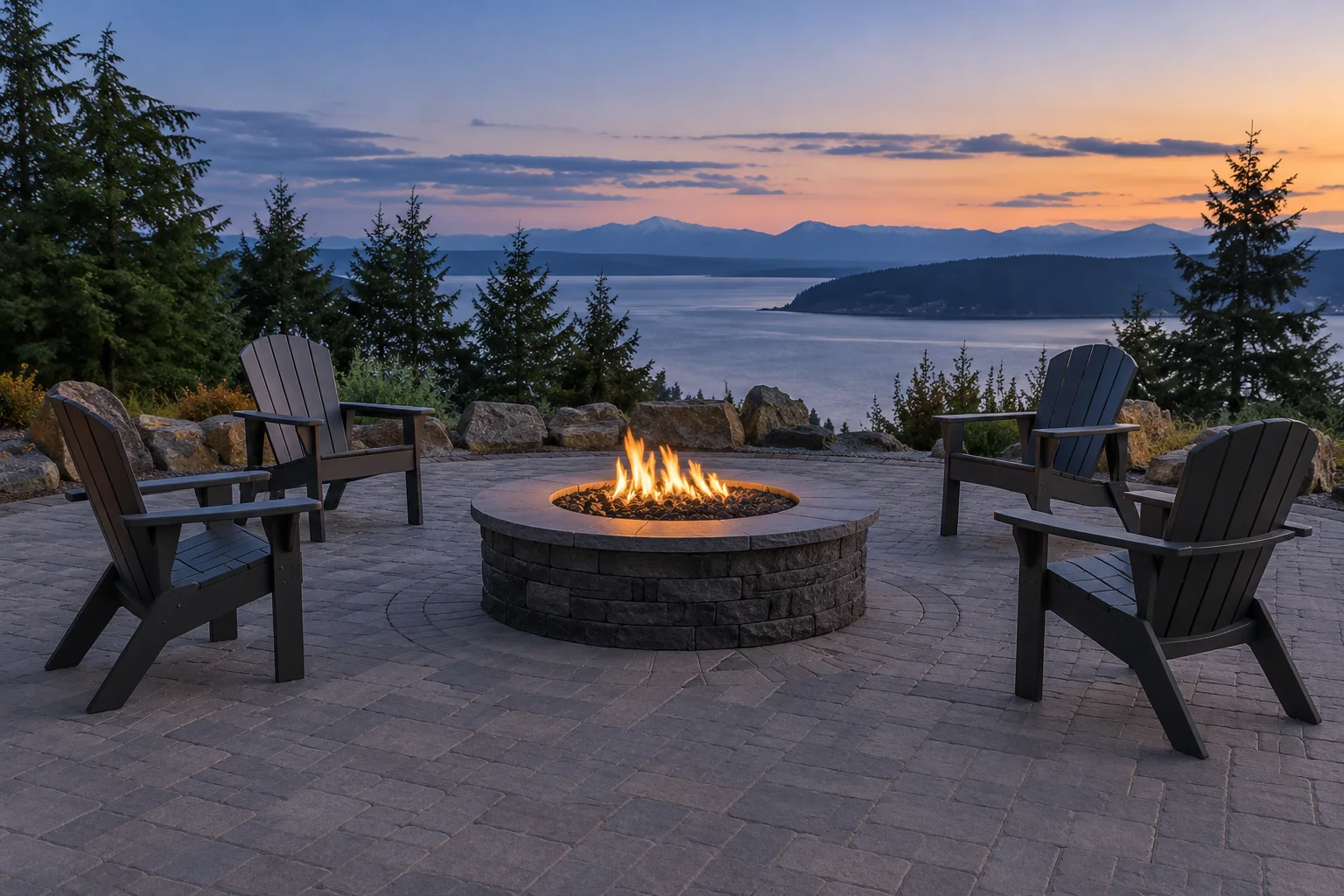
What is the difference between a fire pit, fire table, and outdoor fireplace?
A fire pit is an open gathering feature; a fire table adds a table-style surround; an outdoor fireplace frames the fire within a larger structure. Those names describe the format. They do not establish which fuel, surface, or overhead placement is approved.
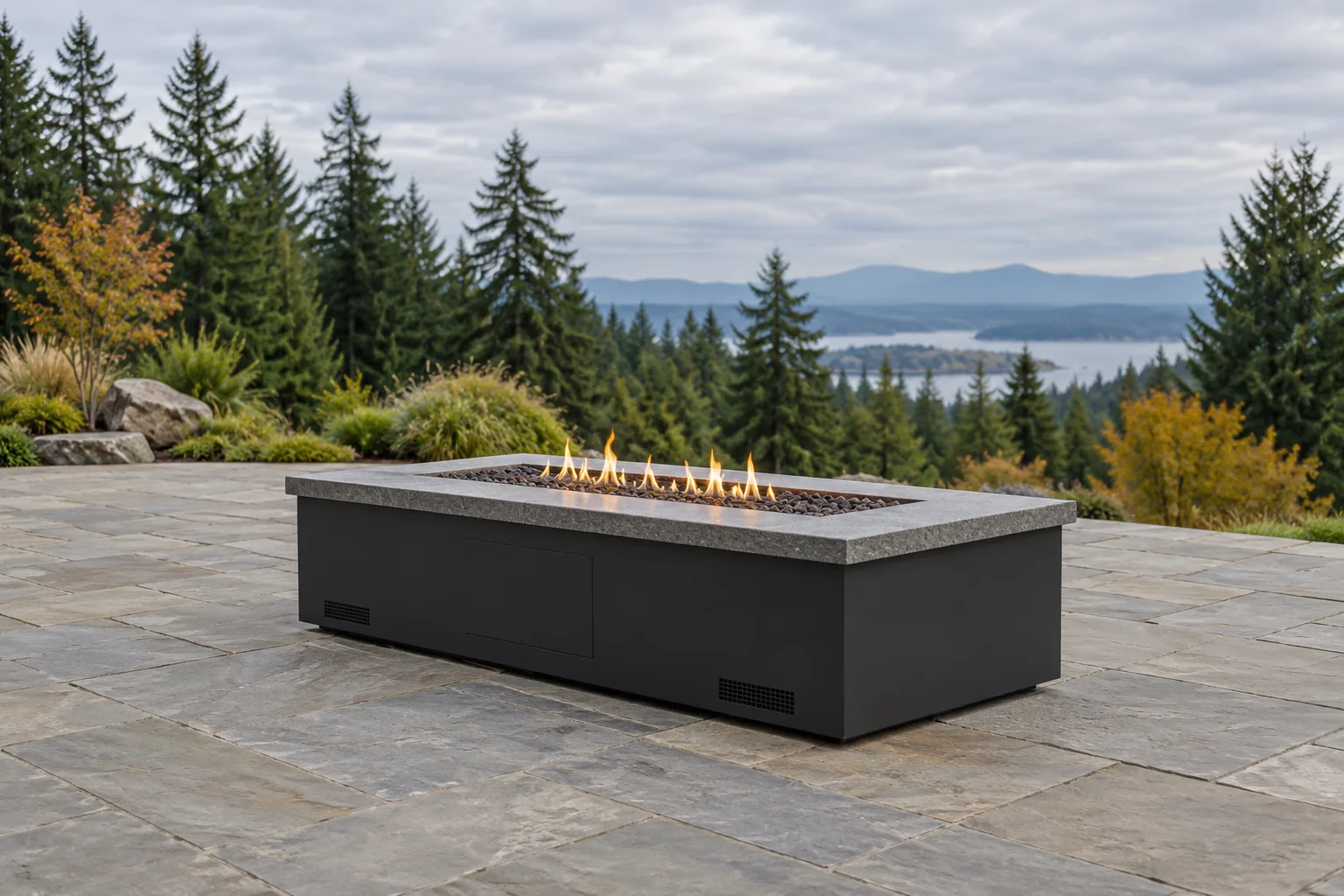
A round pit can encourage conversation from several sides. A rectangular fire table can suit a linear seating arrangement. A fireplace may become the focal point of an outdoor room. Choose a format after you understand the space it needs and how you will use it.
Custom Hearth’s fire table selection includes prefabricated and custom options, with chat, dining, and pub-height formats. A table-height surface still has a hot fire area: its appearance does not make the burner or adjacent rim safe to touch.
Natural gas vs. propane vs. wood fire pits
Natural gas suits a permanent feature where a suitable gas supply is available. Propane can suit an approved tank-fed appliance. Wood offers a traditional fire experience with more smoke, ash, and hands-on tending.
| Fuel | What supplies the fire? | Planning consideration | Ongoing work |
|---|---|---|---|
| Natural gas | A permanent gas line | Gas availability, total appliance demand, the pipe route, and professional connections | Keep the burner and vents clear; maintain the appliance |
| Propane | An approved cylinder or larger propane supply | Correct fuel configuration, regulator, tank location, access, and the appliance’s instructions | Manage the fuel supply and maintain the appliance |
| Wood | Dry, seasoned firewood | Local burning rules, smoke, sparks, separation from combustibles, and wood storage | Tend the fire, extinguish embers, and manage cold ash |
Warming Trends explains the distinction between natural gas and liquid propane fire features. Confirm the exact burner configuration before buying: a natural-gas connection and a propane connection are not interchangeable. A portable propane table and a built-in feature supplied from a large tank can also have very different installation needs.
For a Poulsbo patio used for short evening gatherings, the convenience of a gas feature may matter most. For a Bremerton yard where a wood fire is the goal, first establish whether the proposed location and burning conditions are suitable. These are planning examples, not property-specific approvals.
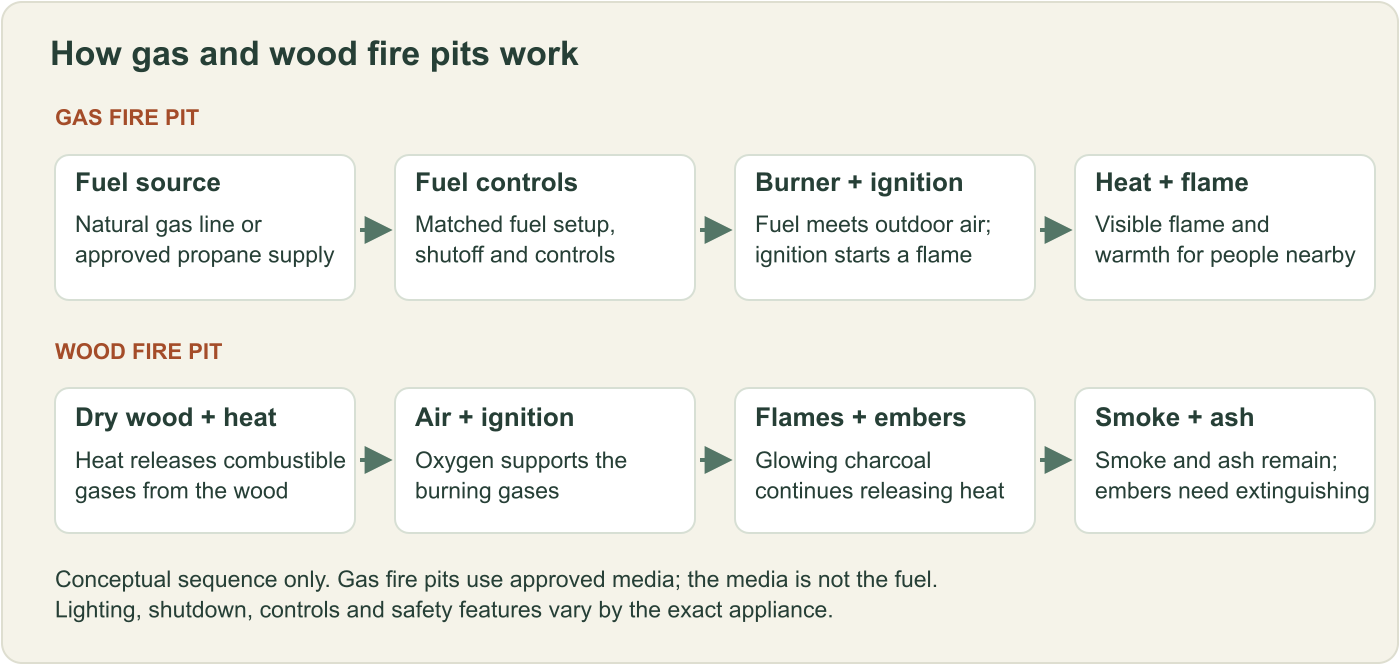
How do fire pits work?
Fire requires fuel, heat, and oxygen. A gas fire pit delivers fuel through a burner; a wood fire pit releases combustible gases as wood heats, then continues burning through the ember stage. Understanding that difference explains why the components and maintenance are different.
How a gas fire pit makes a flame
The fuel supply feeds the appliance through the components specified for its fuel type. A control system manages gas flow, and the burner releases the fuel through its outlets. With sufficient outdoor air and the correct ignition process, that fuel burns as a visible flame.
Depending on the model, ignition may be match-lit, push-button, or electronic. Some electronic systems monitor a pilot or flame and control a gas valve. The operating sequence and safety features are specific to the system; use the current manual rather than assuming every fire pit lights or shuts down the same way. See Warming Trends’ ignition-system guide for an example.
Lava rock, fire glass, and approved decorative logs are media, not fuel. They must be approved for the selected appliance and positioned as its instructions require. Too much media, small particles, or a covered pilot can interfere with operation. Ordinary landscape stones and decorative glass are not substitutes for approved fire-feature media.
How a wood fire pit burns
As wood heats, moisture evaporates and combustible gases are released. Those gases burn where they mix with oxygen. The remaining charcoal glows as embers and continues releasing heat. Damp wood uses more of the fire’s energy to evaporate water and can contribute to a smoky experience.
Use dry, seasoned firewood that is allowed under local rules. The EPA’s archived Burn Wise guidance says wood burns best below 20 percent moisture. That is historical fuel guidance, not permission to burn; current local restrictions still control use.
A recreational fire pit is not a way to dispose of yard waste, trash, painted wood, or construction debris. If smoke creates a nuisance for neighbors, put the fire out. PSCAA’s outdoor-fire guidance explains permitted recreational fuels and nuisance-smoke requirements.
People near the fire receive radiant warmth, while heated air rises and moves with the surrounding air. Wind and seating position affect how comfortable the area feels. A larger flame or higher input rating alone does not tell you how a particular patio will feel.
How should you plan a fire pit for a Kitsap County patio?
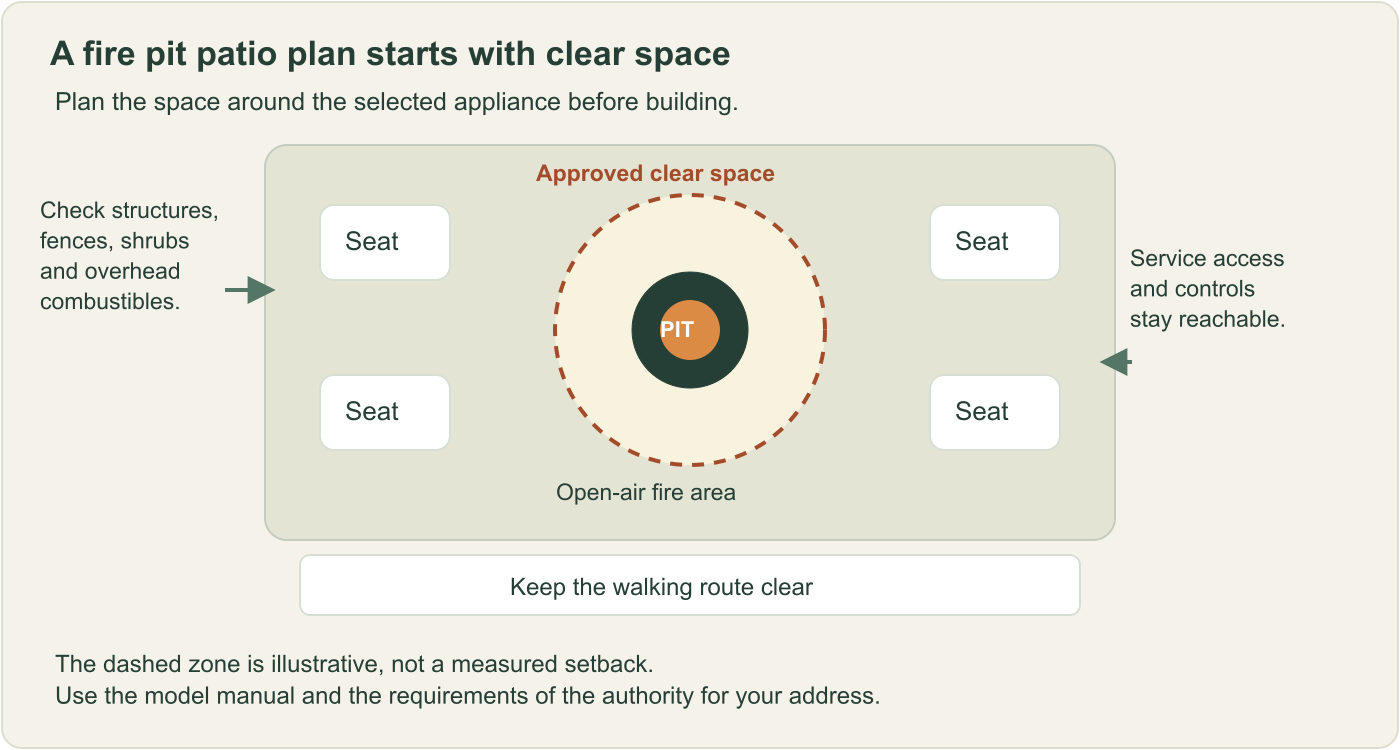
Plan the location, fuel route, drainage, and clear space before buying a burner or building an enclosure. For a Kitsap project, wet-weather care and an exposed site’s wind are practical questions to bring to the site consultation.
Start with a simple sketch showing the house, fences, doors, walking routes, proposed seating, and the feature itself. Record overhead branches, eaves, pergolas, and any other combustible materials. Include photos and the location of an existing gas supply if you have one.
The chosen model determines the approved base and clearances. Manufacturer guidance may differ between a custom burner system and a complete fire table. Do not apply a dimension from a different product, or assume pavers placed over wood turn a deck into an approved installation surface. Warming Trends’ location and ventilation guidance explains why the base, surrounding space, and airflow all matter.
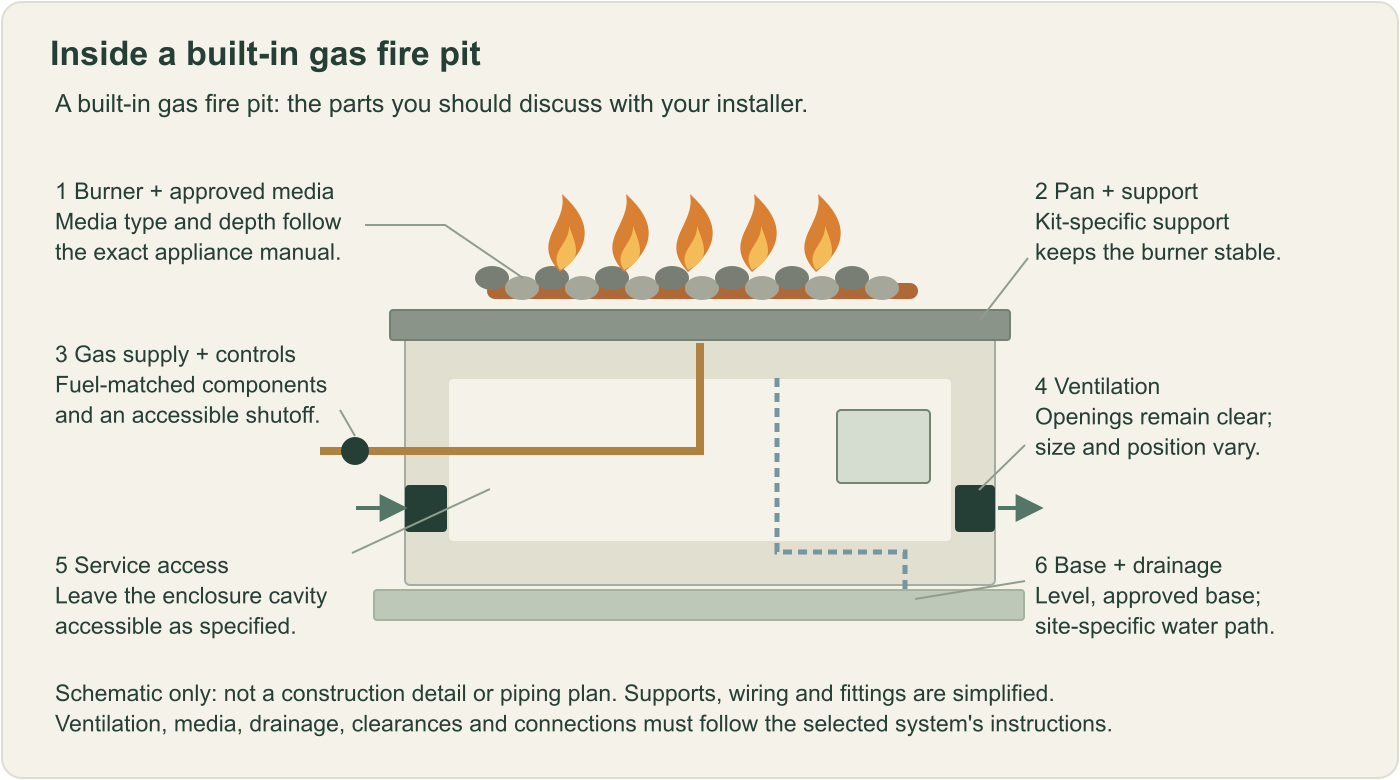
Ask how rainwater will leave the feature and how the specified cover should be used after cooling. Keep the enclosure’s ventilation and access openings in the plan. A decorative finish should not seal vents or make a valve, service panel, or removable burner assembly inaccessible.
For an outdoor kitchen project, also account for the gas demand of a grill or other appliances. Your installer should evaluate the complete system instead of treating the fire pit as an isolated purchase. Before excavation, arrange utility locating through 811 and discuss privately owned lines that may require separate locating.
Do fire pits need permits, and can you use them during a burn ban?
Installation approval and permission to burn are separate questions. A small recreational wood fire may fall within a fire district’s no-burning-permit category, while a permanent gas installation can involve gas-piping, mechanical, electrical, or other construction approvals.
For an unincorporated Kitsap County property, start with Kitsap County Permit Services. For a property inside Bremerton, Port Orchard, Poulsbo, or Bainbridge Island, confirm the responsible city department. Bring the address, appliance manual, fuel details, and site sketch, and ask which approvals and inspections apply. A showroom location does not determine the permit authority for your home.
As a local example, North Kitsap Fire & Rescue’s outdoor-burning guidance describes recreational fires in its service area as no larger than 3 feet by 3 feet by 2 feet, in a designated area, using charcoal or dry firewood; it says no burning permit is required for that category. That does not waive burn bans, location rules, appliance requirements, or separate construction permits.
| What are you checking? | Where to start | Why it matters |
|---|---|---|
| Fire danger restrictions | Kitsap County Fire Marshal and your local fire district | Dry conditions can restrict recreational fires and other outdoor burning |
| Air quality restrictions | Puget Sound Clean Air Agency | These are separate from fire danger bans; the agency’s status table does not report county fire danger restrictions |
| A managed public location | The park, campground, land manager, or relevant state authority | A backyard rule does not establish permission at a beach, park, or campsite |
PSCAA’s air-quality ban rules prohibit wood- and charcoal-fueled outdoor recreational fires during an air-quality burn ban. Gas appliances can be treated differently, but do not assume a propane fire pit is exempt from every fire danger order or property rule. Read the current restriction for the exact fuel and appliance.
For more local context, see Kitsap Fireplace’s guide to checking both kinds of burn restrictions. Check again before each use; this article is a planning guide, not a live burn-ban clearance.
How is a gas fire pit installed?
A permanent gas fire pit is installed by coordinating the appliance, site, enclosure, utilities, and inspections as one project. The following sequence explains what to expect and what to ask your installer.
1. Select the appliance and survey the site
Choose the fuel, burner or complete appliance, opening shape, and ignition system. Review the current manuals for all components. The site visit should confirm that the chosen feature fits the location, fuel supply, and intended use.
2. Confirm the permits and design requirements
Establish the jurisdiction for the property, required permits, and inspection stages before construction. Ask who will submit plans, obtain approvals, and schedule inspections. Record the approved clearances and the surface on which the appliance can be installed.
3. Prepare the base and any approved utility route
The contractor prepares a stable, level base appropriate to the selected feature and the site. If the project needs trenching, hardscape changes, or electrical work, coordinate those tasks before finishing the patio. Drainage should prevent the enclosure from becoming a water trap.
4. Build or place the approved enclosure
A custom feature needs a compatible enclosure and the supports specified for the burner plate or pan. Provide the required ventilation and service access, and keep them clear when applying the finish. Do not fill the cavity or seal openings because they appear unfinished. Warming Trends’ June 2026 installation manual explains enclosure supports, ventilation, drainage, and access. Use the instructions that apply to the selected system.
5. Have the gas and electrical connections completed
A qualified installer connects the correct fuel system and verifies the supply against the manufacturer’s requirements. Gas demand includes the other appliances served by the system. An electronic ignition may also need an approved power source and electrical work. Pipe sizing, pressure adjustments, fuel conversion, and wiring belong to the qualified trades handling the project.
6. Install approved media, test, and complete inspections
The installer positions the burner, pilot, and approved media, performs the prescribed checks, and confirms ignition, operation, and shutdown. Complete required inspections and resolve any issues before using the feature. The Warming Trends AON owner and installation manual shows how media, gas connections, operating instructions, and service requirements are tied to a specific appliance.
7. Complete the owner walk-through
Before the crew leaves, learn the lighting sequence, normal shutdown, accessible shutoff location, cover procedure, maintenance schedule, and symptoms that require service. Keep the manual and model information with your project records.
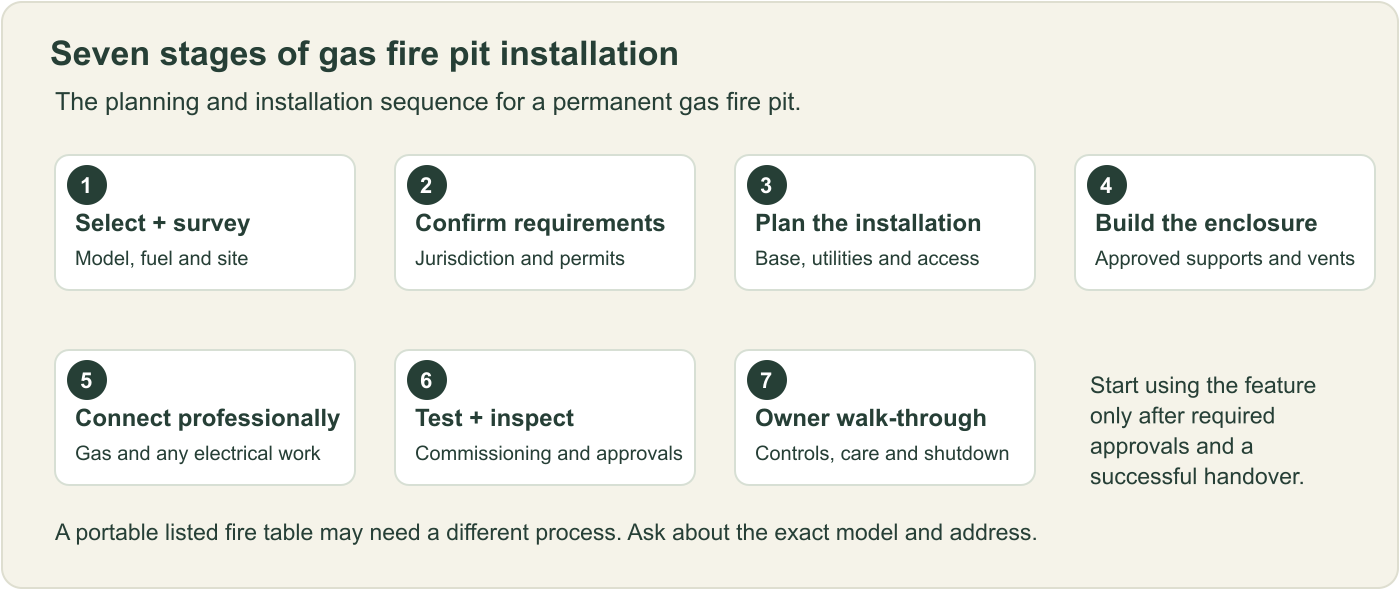
A portable fire table can follow a different setup process. A wood pit requires its own suitable materials, location, and fire-safety planning. Neither should be built or operated by borrowing the instructions for a gas burner kit.
How do you choose fire pit size, heat output, and budget?
Choose a feature that fits the usable space and fuel supply, then compare the full installed project cost. Overall size, burner opening, seating distance, and available walking room are separate measurements.
A BTU-per-hour rating describes the rate of energy input. It does not guarantee comfort across a windy patio. Ask to compare flame appearance, controls, approved operating conditions, and the available gas capacity alongside the rating.
For budgeting, ask for a written scope that separates the following:
- The appliance: burner or complete fire table, ignition, approved media, and specified accessories.
- The site work: base, enclosure, supports, hardscape repairs, and finish materials.
- The utilities: gas work, tank arrangements where applicable, and any electrical work.
- The approvals: plans, permit fees, inspections, and commissioning.
- The handover: owner instruction, warranty information, and ongoing service expectations.
Identify exclusions as carefully as inclusions. A burner-only price does not establish the cost of a finished patio project. Custom Hearth’s purchasing FAQ explains that project costs vary and that a site preview helps narrow the estimate. Ask for a quote for your address and selected system rather than relying on a generic national price range.
What maintenance and safety does a fire pit need?
A gas fire pit needs inspection and care even though it does not produce wood ash. Before use, follow the manual’s owner checks and look for debris, damaged components, obstructed vents, or other changes. Use a specified cover only after the appliance has cooled, and follow its wet-weather instructions. Warming Trends’ maintenance guidance covers routine care and professional service.
Keep children and pets away from the hot area, supervise every fire, and turn it off or fully extinguish it before leaving. For an approved wood-burning device, use its specified spark protection and handle ash only after it is completely cold. The U.S. Fire Administration’s outdoor-fire guidance reinforces supervision, spark control, and extinguishing fires before leaving.
If you smell gas, do not light the feature. Follow the appliance’s emergency instructions. If an odor continues, leave the area and contact the gas supplier or fire department from a safe location. Do not repeatedly attempt ignition or troubleshoot a suspected leak. If any component has been submerged, have a qualified technician inspect it before reuse.
Outdoor fire pits belong outdoors. Never use one inside a house, garage, tent, or other enclosed space. A covered patio or pergola requires a model-specific assessment of overhead clearance, ventilation, and local approval; an open side alone does not establish safe placement.
What fire pit products and services does Custom Hearth offer?
Custom Hearth has showrooms in Port Orchard and Poulsbo and publishes information about outdoor fire features, indoor hearth products, and installation and service support. Its website is a useful place to start a product discussion and request a project quote.
Outdoor products and project planning
- Outdoor gas fire pits: standard-size options and custom features. The company’s fire pit page specifies gas-fired outdoor burner systems and says they are not intended for wood fires.
- Fire tables: prefabricated and custom formats for different seating arrangements.
- Warming Trends systems: CROSSFIRE brass burners, paver gas-insert options, ignition choices, and custom fire-feature planning. Ask which exact system fits your opening, fuel supply, and site.
- Outdoor living products: outdoor fireplaces, grills, BBQ islands, Big Green Egg products, and related outdoor kitchen options.
- Outdoor kitchen design: custom design and project management for larger outdoor living projects.
Indoor products, installation, and service
Custom Hearth also lists wood, gas, pellet, and electric indoor hearth products, including fireplaces, stoves, and inserts within the relevant categories. Its website describes installation, warranty support, and repair for products it carries.
The Custom Hearth service department lists gas and pellet appliance service, wood-appliance safety inspections, chimney inspections and sweeps, diagnostics, and accessories or remote support. For an outdoor fire feature, confirm service availability for the exact model, project location, and work needed. Product availability, installation schedules, and warranty coverage should be confirmed when requesting a quote.
Visit a Custom Hearth showroom in Kitsap County
The Poulsbo phone is listed as sales only. Verify hours and appointment arrangements on Custom Hearth’s contact page before traveling. Homeowners in Bremerton, Silverdale, Bainbridge Island, and nearby communities can ask the team which showroom and service arrangements best fit their project.
For additional local planning resources, browse Kitsap Fireplace’s buying basics or the directory listings for Custom Hearth in Port Orchard and Custom Hearth in Poulsbo.
Fire pit FAQs for Kitsap County homeowners
Is gas or wood better for a fire pit?
Gas is convenient for controlled lighting and shutdown with less ash handling. Wood provides a traditional fire experience but brings smoke, sparks, tending, and ember disposal. Choose based on your site, fuel access, preferred experience, and current local restrictions.
Can I burn wood in a gas fire pit?
No. Use only the fuel and media approved for the gas appliance. Custom Hearth specifically states that its outdoor gas fire pits are not intended for wood fires. Wood can damage the system and interfere with safe operation.
Do I need a permit for a fire pit in Kitsap County?
It depends on the property, appliance, and work involved. A recreational burning-permit exception does not decide whether new gas piping, electrical work, or a permanent structure needs construction approval. Confirm the project with the authority for your address.
Can I use a propane fire pit during a burn ban?
Check the current order for the exact appliance and location. Air-quality and fire danger bans are separate, and an exception for a gas cooking appliance does not automatically establish permission for a recreational gas fire feature.
How far should a fire pit be from the house?
Use the selected appliance’s approved clearances and the applicable local requirements. Also check fences, seating, branches, eaves, and other combustibles. A distance from a different product or a general online article is not an installation specification.
Can a fire pit go on a deck or under a pergola?
Only if the exact appliance, installation surface, overhead conditions, and local approval permit that arrangement. Do not assume a heat mat, layer of pavers, open sides, or a low flame makes the location acceptable.
Can an existing wood fire pit be converted to gas?
Some features may be suitable for an approved gas-insert system after assessment. Custom Hearth’s Warming Trends page describes paver gas-insert options. The enclosure, ventilation, drainage, supports, fuel supply, and clearances still need review.
Can I cook over a gas fire pit?
Only if the manufacturer expressly permits cooking and specifies how. Decorative media and burners are not automatically cooking equipment. If outdoor cooking is a priority, ask Custom Hearth about its grills, BBQ islands, and outdoor kitchen products.
Does a gas fire pit need electricity?
Some systems use match-lit or battery-powered ignition; others need an approved electrical supply. Ask about the exact ignition system and its power requirements before the patio is finished.
Does Custom Hearth help with installation and repair?
Custom Hearth describes installation, warranty support, and repair for products it carries. Contact its team to confirm the scope for your selected outdoor fire feature, address, and service needs.
Start with your patio plan and an exact product discussion
Bring a sketch, photos, the project address, fuel information, and your preferred style to a showroom conversation. Ask how the appliance, base, enclosure, utilities, approvals, and future service fit together. Those answers will tell you far more than a flame photo alone.
Discuss your fire pit project with Custom Hearth
Need help identifying an existing appliance? See how to find the exact fireplace model and manual before requesting service.