A moisture-meter number is useful only when you know how it was obtained. Before judging a firewood supply, read the meter’s instructions and confirm that the instrument and setting are intended for wood. A reading from an unidentified setting is not a meaningful purchasing record.
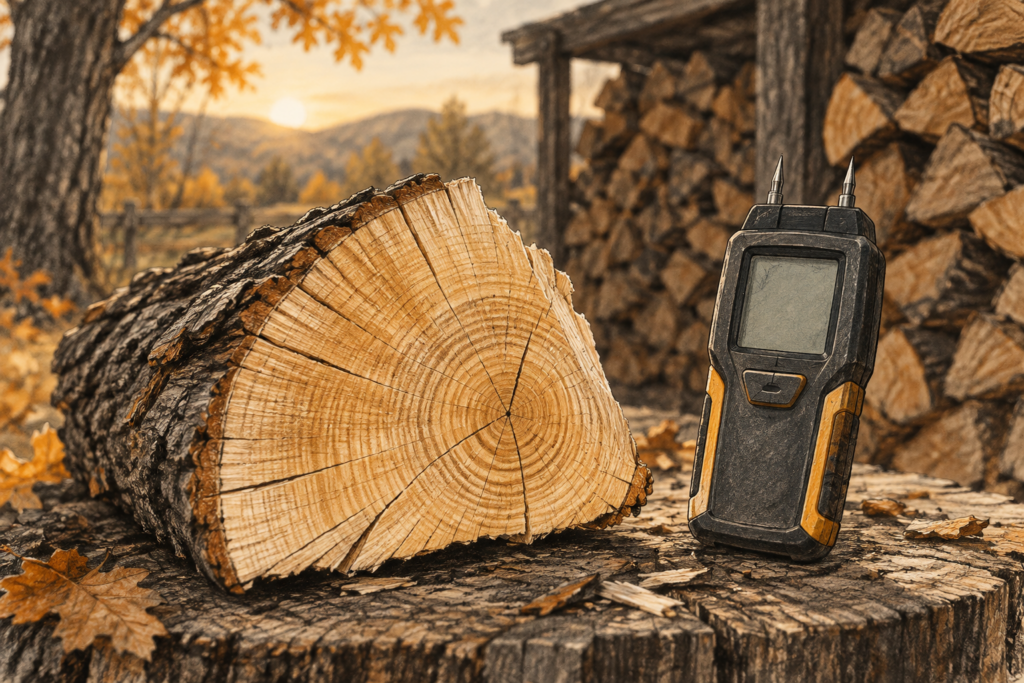
EPA’s archived firewood moisture guidance explains checking wood on a freshly split surface and identifies a moisture range suitable for burning. Follow that guidance with the meter’s own instructions and your appliance requirements; a dry-looking outer surface does not describe the interior of a log.
Record the measurement conditions
Keep the meter model, setting, sample identification, measurement location and result together. If you are discussing a delivery, ask how the supplier assessed moisture and what their description of the wood means. Do not turn one reading into a claim about an entire mixed stack.
Have splitting and other tool work performed safely by someone equipped for it. Do not improvise a test around an operating fire or hot appliance. If the instructions or results are unclear, ask the manufacturer or a qualified service professional before relying on the number.
Connect the record to storage
Label the stack or delivery in your notes so later readings refer to the same supply. Keep appliance operation, chimney maintenance and applicable burn restrictions as separate checks. A moisture measurement answers a limited fuel question; it does not establish that a fireplace is ready or permitted to operate.
Related reading: Buying Firewood? Understand What a Cord Measures.